
McDuffie Projected Versus Actual Release
A projected release date is an estimate or calculated sentence milestone. It is not proof that the person left custody. The actual date is established when the responsible agency records the release, discharge, or transfer. The difference is critical in McDuffie County because the public jail pages show arrest date, days in jail, bond, charge, court, and custody status, but they do not publish a projected-release field.
A pretrial detainee usually has no sentence-based release date. Release may depend on posting bond, a first appearance, a later court order, dismissal, or action on a hold. A locally sentenced person may have a term and jail credit, but the public roster does not provide enough facts to calculate the end date safely. For that record, use the sentencing order through the McDuffie Clerk of Superior Court and the McDuffie County Jail or Sheriff’s records channel.
A transfer also ends one facility’s custody without releasing the person into the community. Someone leaving McDuffie County Jail could enter GDC, federal, or another county’s custody. Read the destination and release authority before describing the event as a community release.
Find McDuffie Projected Release Dates
Start with custody type, not a name search across unrelated systems. The same person may move from the McDuffie County Jail to GDC, then later to parole supervision. Each stage has different fields and a different agency record. Federal BOP records use another vocabulary. The following sequence keeps those records from being mixed.
- Check the McDuffie jail population view to determine whether the person is currently booked, shown as released, or absent. Absence alone does not establish release.
- For a county case, obtain the sentencing or bond order from the court. Ask the jail or Sheriff’s records division for the release date, release authority, and any transfer agency.
- For state prison custody, open the GDC Find an Offender page and use the official offender query. Compare the GDC ID, name, status, and facility before reading sentence fields.
- If parole is involved, check the Board’s TPM information. Treat the tentative parole month as a review milestone, not the final release date.
- For federal custody only, use the BOP locator and its Release Date field. A future date is projected; a past date with no facility generally marks release from BOP custody.
The GDC offender query form is the direct state search entry point.
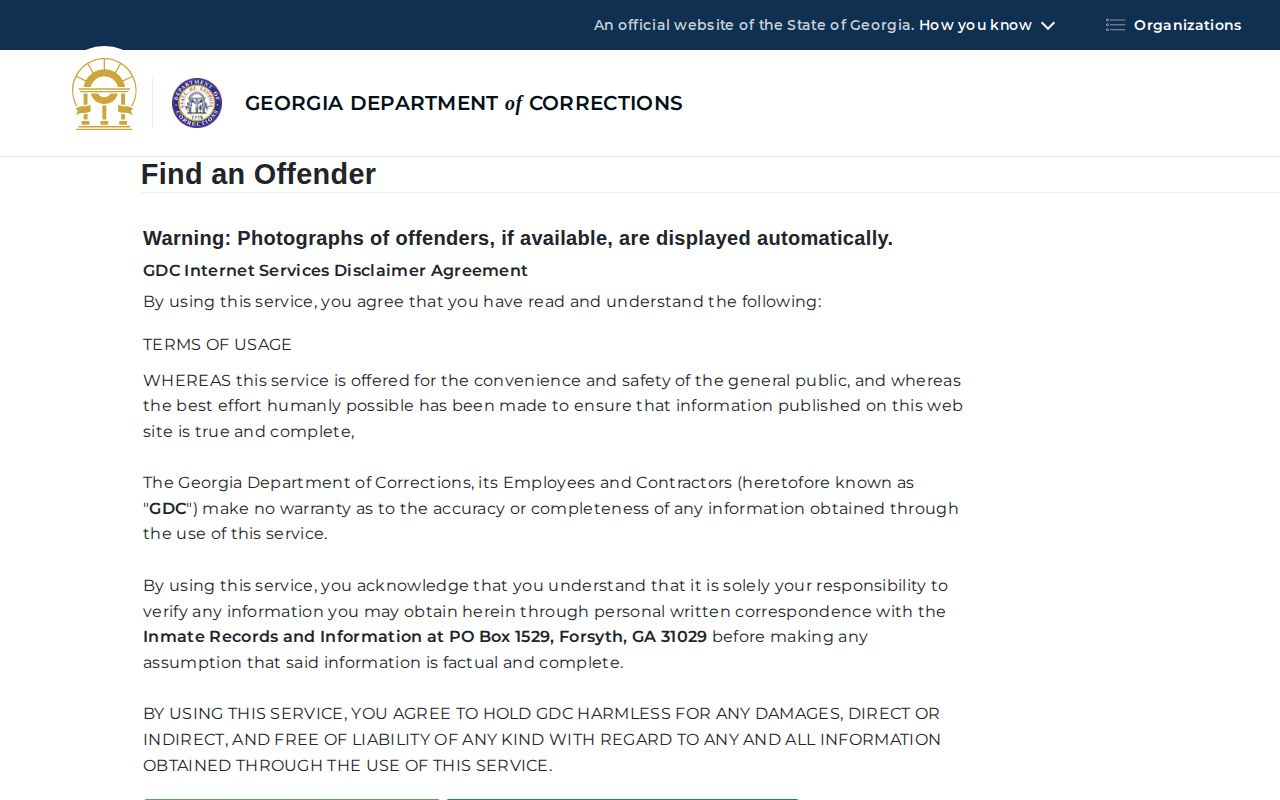
When no public field resolves the question, request the source record. The GDC open-records process covers state records, subject to listed exceptions. County release records belong with the Sheriff, and court orders remain with the court. The McDuffie County released inmate lookup provides the wider custody-confirmation path.
Georgia Credits and McDuffie Release Dates
Georgia’s state-prison rules define several sentence dates. Sentence begin date can account for jail time served when appropriate. Sentence end date reflects the maximum sentence along with non-running time and earned-time effects. Maximum release date is the date a person would leave GDC custody after serving the full term apart from parole decisions. A tentative parole month, or TPM, is set through the parole process for eligible cases and has a different purpose.
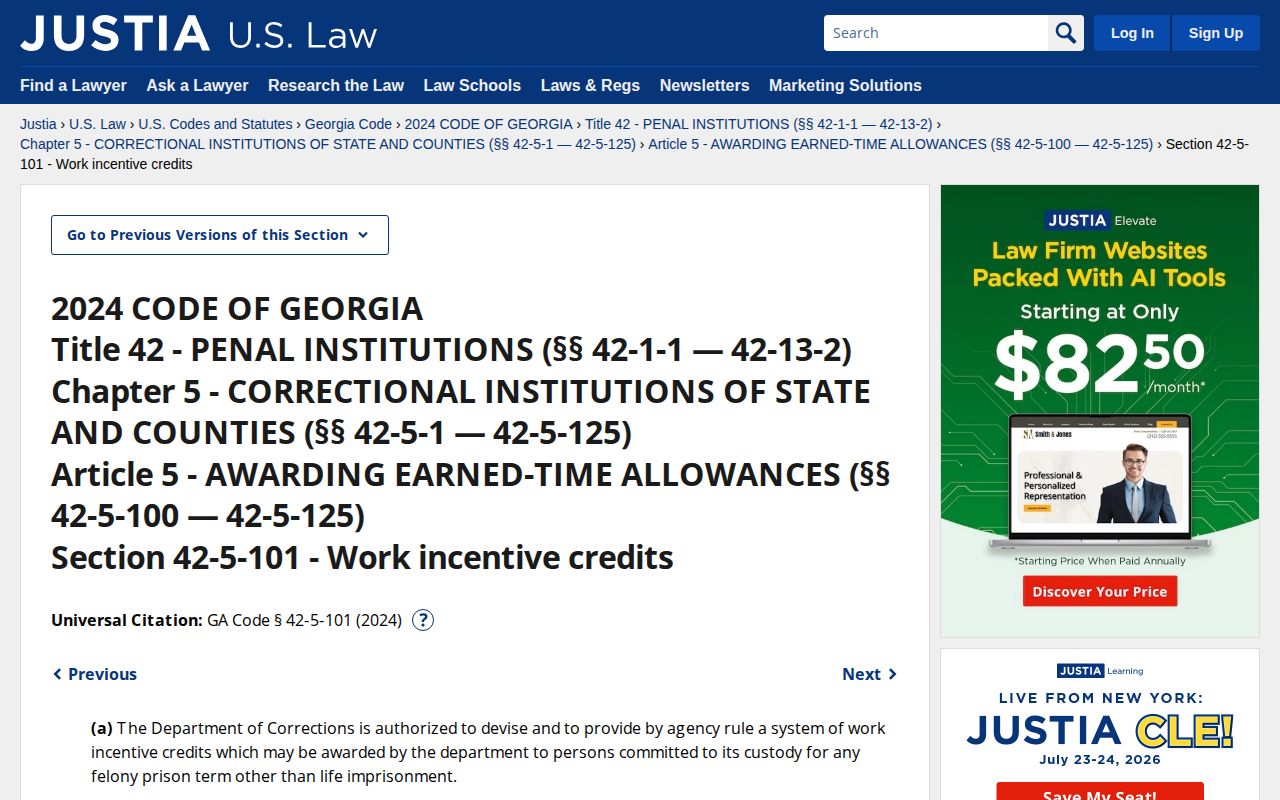
Work incentive credits arise under O.C.G.A. § 42-5-101. The law permits credits for approved education or counseling, satisfactory work, and conduct. It allows up to one day of credit for each qualifying day and permits GDC to recommend that the Parole Board use credits to advance an already established tentative parole release date. It does not create a simple daily formula for McDuffie County Jail.
Likewise, Georgia does not support a blanket claim that every state prisoner serves 85 percent. O.C.G.A. § 42-9-45 generally addresses parole-consideration timing, with exceptions tied to other serious-offense and recidivist laws. Board guidelines account for offense severity and other factors. The individual sentence, applicable statute, credits, and Board action control.
The published work incentive credit statute shows why earned credit is tied to GDC and Board action.
Why McDuffie Release Dates Change
A projected date can move because it is based on facts that agencies and courts may update. Some changes affect sentence calculation. Others affect whether release can occur on the expected day. A detainer is a request or legal basis for another authority to take or hold custody. It can mean a person leaves one facility but remains confined elsewhere.
| Factor | Possible effect | Best record |
|---|---|---|
| Jail credit or corrected sentence | Changes the sentence start or end calculation | Court order and agency sentence record |
| Non-running time | Time that does not count may move the sentence end later | GDC sentence computation |
| Work incentive credits | May support a recommendation to advance an established TPM | GDC and Parole Board record |
| Parole denial or later Board action | Prevents or changes the expected parole release | Board process and TPM tools |
| Detainer, warrant, or transfer | May shift custody to another agency rather than produce community release | Jail, court, and receiving-agency records |
| Recalculation or appeal order | Can move a state or federal projected date | Sentencing court and corrections agency |
Misconduct can also affect parole timing or earned benefits, but no result should be inferred without the agency record. The Board may reconsider a prior parole decision up to release. BOP separately warns that federal dates may be revised during sentence review and recalculation. Check again near the listed date.
Confirm McDuffie Actual Release Dates
Confirmation comes from the authority that held custody. For McDuffie County Jail, call 706-595-2040 for current custody information or request a booking-and-release record from the Sheriff’s Records Division at 706-597-3862. Ask for the actual release date and time, release authority or reason, and transfer agency if one received custody. The public roster’s RELEASED status can help, but the formal record supplies more context.
For a state prisoner, compare the GDC status and sentence fields, then use GDC records if the public result is unclear. For parole, distinguish the TPM from an effective release and later supervision status. Georgia VINE can send custody-change notices where its data system covers the person and facility, but an alert is not the complete release record. The VINELink Check explains the notification path.
For BOP, a past Release Date with no listed facility generally indicates release from federal custody. That statement does not establish that a county or state case ended, nor does it rule out another agency’s custody. Confirm any receiving authority.
Three McDuffie Release-Date Vocabularies
McDuffie County users encounter three date systems that sound alike but are not interchangeable. The county roster reports arrest date and days in jail, not a projected release date. GDC uses sentence begin, sentence end, maximum release date, parole consideration, and tentative parole month. BOP labels a field Release Date and explains future and past values under federal rules.
| Custody | Date language | What it means |
|---|---|---|
| McDuffie County Jail | Arrest date, days in jail, RELEASED status | Booking and custody facts; no public projected-date field |
| Georgia GDC | Sentence end, maximum release, TPM | State sentence computation and a separate parole milestone |
| Federal BOP | Release Date | Future date is projected; past date with no facility generally means BOP custody ended |
The BOP record explanation defines how its Release Date field should be read.
Using the county’s “days in jail” count to forecast release ignores the court order, holds, and transfer status. Using a TPM as a firm GDC date ignores final Board review. Applying the BOP field to a state sentence uses the wrong sovereign’s calculation. Custody type must come first.
The phrase “sentence end date” also should not be treated as a synonym for “maximum release date.” Georgia’s corrections rules describe the sentence end date through the maximum sentence length, non-running time, and earned-time effects. Maximum release date describes when GDC custody would end if the full sentence were served apart from parole. Parole consideration date and TPM address Board review instead. Each field answers a distinct question, so record requests should name the exact field that needs confirmation.
For a local McDuffie sentence, the arrest date is not always the sentence begin date. Jail credit may depend on the sentencing order and how the court applies time already served. Bond status can change, another warrant can create a hold, and a transfer can end the county booking while custody continues. The roster supplies useful clues, but only the court and jail records can reconcile those facts into an actual local release date.
Note: A date from one corrections system cannot establish release from another system that may hold the same person.
McDuffie Release-Date Record Requests
When public tools do not show enough, make a narrow records request. For the county jail, identify the full name, date of birth if known, arrest or booking date, arresting agency, and case or warrant number. Request the booking-and-release record, actual release time, authority or type, bond or court-order reference, and transfer agency. The Sheriff’s form asks for requester contact details and a specific description of the record.
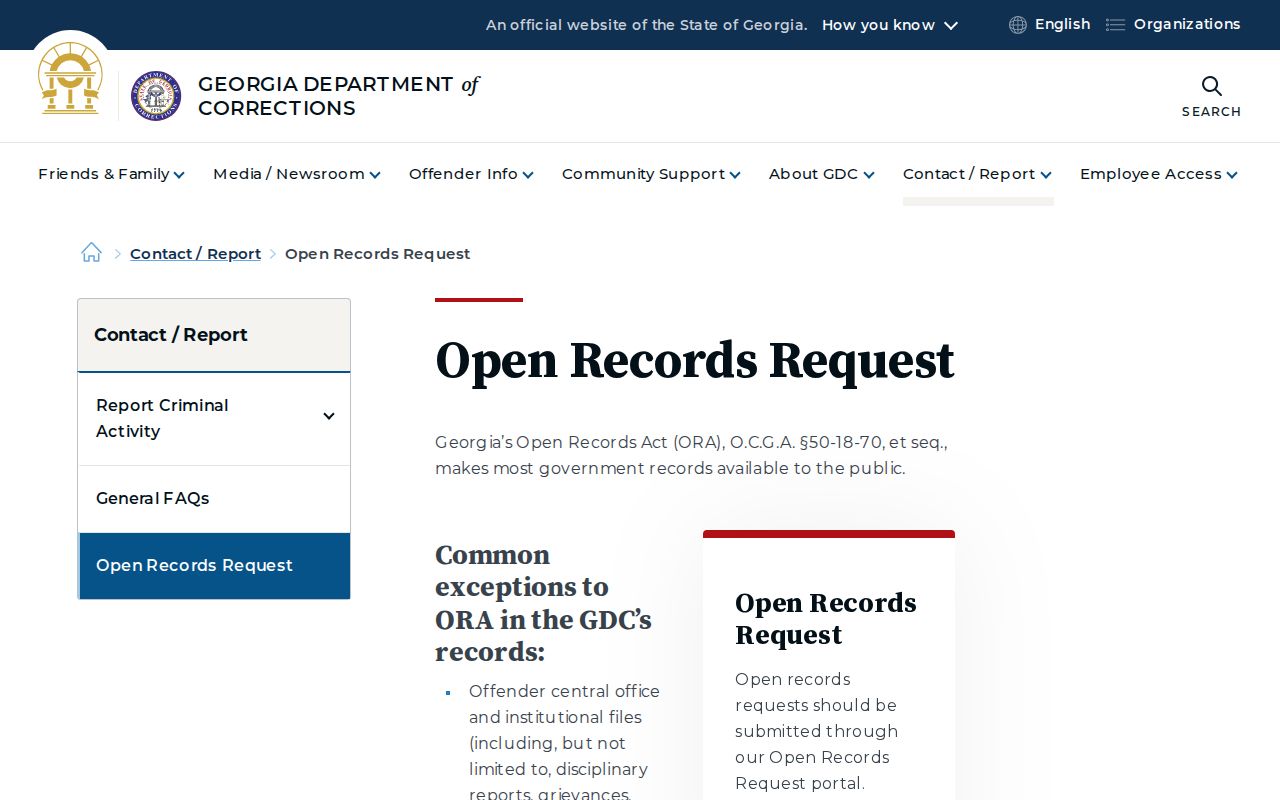
For GDC, use its online records process and identify the offender by GDC number when available. GDC lists exceptions for institutional, investigative, security-sensitive, and medical records, so a request for sentence and release fields should remain focused. A court request is better for the sentencing order itself. These records can reconcile an estimate with the legal order and agency computation.
A useful state request can ask for the public sentence begin date, sentence end date, maximum release date, current custody status, and release or discharge date if one has been entered. If parole affects the estimate, request or check the Board milestone separately. For a federal record, use the BOP number when known and compare the listed facility with the Release Date field. The BOP cautions that pending sentence review or recalculation can make a future date change, so a saved result should be checked again close to the expected date.
County requests need a different focus. Ask whether the release was to the community or to another authority, since the latter can look like a release in the originating booking record. A transfer agency, court-order reference, and exact timestamp help distinguish a bond release from movement into GDC, federal, or another local custody system.
The GDC request page shows the state channel and its stated limits.
Public Record Search
Sponsored Results